“All scripture is given by inspiration of God, and is profitable for doctrine, for reproof, for correction, for instruction in righteousness:” – 2 Timothy 3:16
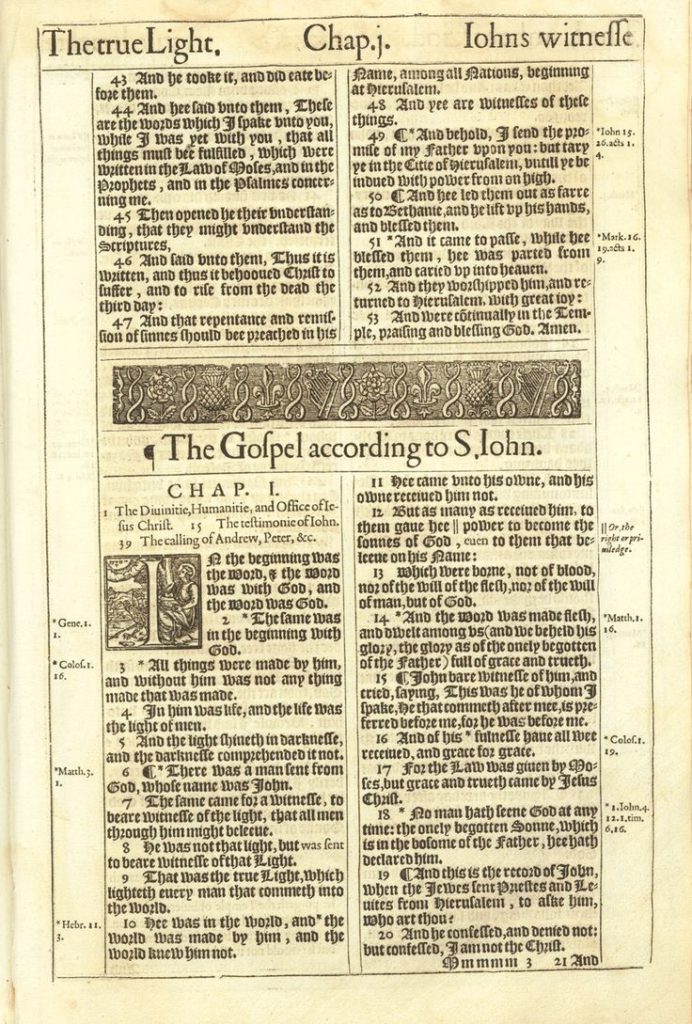
THE LAW OF THE LORD is perfect, the psalmist tells us. Jehovah’s testimony is sure, his statutes right, his commandment pure, his judgements true and righteous altogether. For my text declares that every word of God is inspired, and, being inspired, sufficient as the believer’s final authority on all matters, particularly doctrine. It is the only source of stability in an age of great turmoil; it is the only source of immutability in a world which perpetually changes.
But many professing “Christians” and self-appointed “scholars” attempt, through specious and pseudo-scientific sophistry, to negate the wonderful truth which my text declares. They insist that, in spite of the reality that all things are possible with God, and that God cannot lie, we cannot take him at his word that he is able to inspire and preserve his word unto every generation. Rather than humbly believe the King James Bible is both the inspired and preserved word of God, they appeal to feckless mortal fools who have existed but a few decades, and whose feeble minds imagine they are qualified to decide what should and should not be in the Bible. The same sneer wanton slander against the venerable holy writ, proffering oft-refuted platitudes that the King James Bible is hard to understand, or derived from unreliable, new manuscripts, or sullied with kingly prejudices and frequent revision. Concurrently, they trumpet the multitude of modern Bible revisions as being better suited for man, despite these consistently rating as being significantly more difficult to read and understand than the King James Bible, despite these being derived from some of the most corrupt “Bible” manuscripts in existence, despite these omitting thousands of words from the King James Bible and being constantly updated and altered.
In the argument that there is no inspired Bible today, and that the best the brilliant “scholars” and textual “experts” can offer is a collation of faulty, contradictory manuscripts which, if enough revision and comparison is rendered, might someday possibly resemble a slightly accurate reconstruction of what the original manuscripts might have been, the Bible corrupters ineluctably anoint themselves as the final authority on “all matters of faith and practice” – a position which ought only be occupied by the word of God. Doubtless, no Bible butcherer would durst be so bold as to concede this despicable desire to supplant the Almighty as the final authority, but their conduct evinces their sordid wishes time and again. Moreover, such behavior replicates the strategy employed by Satan in the Garden of Eden – questioning God’s word creates two conflicting authorities, and one must always prevail over the other. Are mere mortals to be believed over Jehovah, who can neither lie nor sin? Is a God who never changes to be charged with authoring a book which must be constantly updated to suit the desires of the age? Is a God who is not the author of confusion to be accused of producing multitudes of contradictory manuscripts?
Dear reader, ALL scripture is inspired by God, and ALL scripture is preserved by God. He who cannot lie has promised to keep his words unto every generation – the same words which have forever been settled in heaven (Psalm 119:89) long before they existed on earth. Faced with this truth, the self-appointed “scholar” will smugly inquire, “But how can one tell what is or is not scripture?”, hoping to stump the Bible believer with his disingenuous question. Simple – by referencing the 95% of extant manuscripts which underly the King James text – Masoretic Hebrew and Textus Receptus Greek. A minority of all existing Bible manuscripts contain the self-contradictory, heretical rubbish so beloved by Bible butchers everywhere, and yet while the King James manuscripts maintain marvelous harmony throughout their hallowed pages, these paltry minority manuscripts are replete with contradictions and pitiful scholarship.
I digress. To those who allege the Bible was at one time inspired, but no longer is so, I ask you what good would be preservation without inspiration? And to those who allege the Bible was at one time preserved, but no longer is so, I ask you, what good would inspiration be without preservation? Why would God bother giving his words to man, if after a few years those words would cease to be inspired, and be irretrievably lost among a sea of faulty manuscripts? If the Almighty could create all things by the word of his mouth, and raise Jesus Christ from the dead, why can he not be considered capable of preserving his own words as he promised he would? To you who insist the King James Bible is not inspired or perfectly preserved, I ask, is God a liar? Is he incapable of doing what he said he would do? Such can be the only corollary to be derived from the doubt cast upon the inspiration of scripture. Do ye not therefore err, because ye know not the scriptures, neither the power of God?
We can be sure, however, that God is not a liar if we choose to believe him rather than the sinful men accusing him of imbecility. As with all else pertaining to life and godliness, you must decide for yourself who your final authority will be. Will you believe God, or you will believe men? The matter is quite simple, when viewed through that lens. Will you believe God’s declaration that his every word is inspired, and his promise to preserve his words unto every generation, or will you believe men’s unfounded, unproven claims that the King James Bible is uninspired and unreliable? Will you believe that holy men of God spake as they were moved by the Holy Ghost, or will you believe that men wrote the Bible themselves as a means of controlling the masses? Will you believe God’s promise that “my words shall not pass away”, or will you believe men’s assertion that his words have indeed passed away, leaving us with only highly flawed manuscripts?
Let us proceed believing the King James Bible is the inspired, preserved word of God. That brings us to the second part of my text: that the holy writ is profitable for doctrine, for reproof, for correction, for instruction in righteousness. The Christian must have something of a bedrock for his beliefs, and what better bedrock can there be but the blessed book? And, blessed be God, which hope we have as an anchor of the soul, both sure and steadfast. For all questions of distinguishing what is sound and unsound doctrine, we must refer to the King James Bible. For all questions of what conduct and belief must be reproved, we must refer to the King James Bible. For all questions of what instruction the believer ought receive, we must refer to the King James Bible.
CONCLUSION
Dear reader, it would be well if you realized that the King James Bible is the inspired, preserved, perfect word of God, and that the modern “Bible” versions which “scholars” praise are but pitifully inferior counterfeits. But that knowledge does no good, if you do not derive from the sacred scriptures their most important function – how to receive eternal life. For though the Almighty authored his book to benefit men in many ways, there is no greater purpose to those pure pages than the salvation of souls. How then can this redemption be obtained?
In the first place, you must acknowledge that you are a sinner (Romans 3:20) who has violated God’s holy law and deserves to be punished with everlasting fire for eternity in hell. You must believe the gospel (1 Corinthians 15:1-4) that Jesus Christ- the only begotten, sinless Son of God – died on Calvary’s cross and shed his precious blood to pay for your sins, was buried, and was bodily resurrected three days later unto the justification of all who believe on him. And if you will receive Christ as your Savior, believing that he – and he alone, apart from all your good works, intent to reform, or religious devotion – is your only hope for heaven, you will receive so great salvation, which is the end of all that the King James Bible offers to men. I pray that you do so.